Spätblühende Traubenkirsche

Prunus serotina · auch: Traubenkirsche, Spätblühende-

13 Fotos

Beschreibung

Unterscheidungsmerkmale der giftigen Spätblühenden Traubenkirsche zur einheimischen, wenig giftigen Gewöhnlichen Traubenkirsche:

  • Wie der Name bereits sagt, hat die Spätblühende Traubenkirsche eine etwas spätere Blütezeit als die Gewöhnliche,
  • weiters ledrige Blätter
  • mit einer glänzenden Oberseite
  • in einem dunkleren Grün als das der Gewöhnlichen Traubenkirsche, deren Blättern allerdings die Ledrigkeit und der Glanz fehlen, deren Früchte jedoch ganz ungewöhnlich - und deshalb vermehrenswert - laut Roth, Dauderer und Kormann eine geringere Giftigkeit aufweisen.

Bereits 1623 wurde die Spätblühende Traubenkirsche als robuster Zierbaum von Nordamerika („Amerikanische Traubenkirsche“) nach Europa gebracht, wo sie sich durch ihre Genügsamkeit (Pioniergehölz) selbständig stark auszubreiten begann und sich zu einem problematischen Neophyten entwickelte.

Die Bekämpfung gestaltet sich schwierig: Aus bei ihrer Rodung  übersehenen Wurzelstücken bilden sich in kurzer Zeit dichtere Bestände als durch Kernwüchse (Vermehrung durch Samen). So wird ihr mit sorgfältigem Absägen der Stämme und anschließendem Abdecken der Baumstümpfe mit Folien, mit Herbiziden und Knorpelschichtpilzen zu Leibe gerückt.

Allerdings wird von manchen Fachleuten die Meinung vertreten, dass sich die Bestände der Spätblühenden Traubenkirsche - wie auch die des Drüsigen Springkrautes - von alleine wieder lichten, wenn man sie geduldig einer ungestörten Sukzession (naturgegebene Pflanzenabfolge) überlässt.

Die Beeren der Spätblühenden Traubenkirsche, vor allem ihre Kerne / Samen!, sollen wegen ihres Giftgehalts von Menschen nicht roh verzehrt werden. Das Fruchtfleisch kann durch gründliches Kochen entgiftet werden. Viele Vögel jedoch lieben diese Beeren, sodass von der Spätblühenden Traubenkirsche von einem Vogelschutzgehölz gesprochen werden kann!


Andere Namen

Amerikanische Traubenkirsche

Merkmale

Blütenfarbe weiß
Blütezeit Frühsommer | JuniHochsommer | JuliVollfrühling | Mai

Vogelwelt

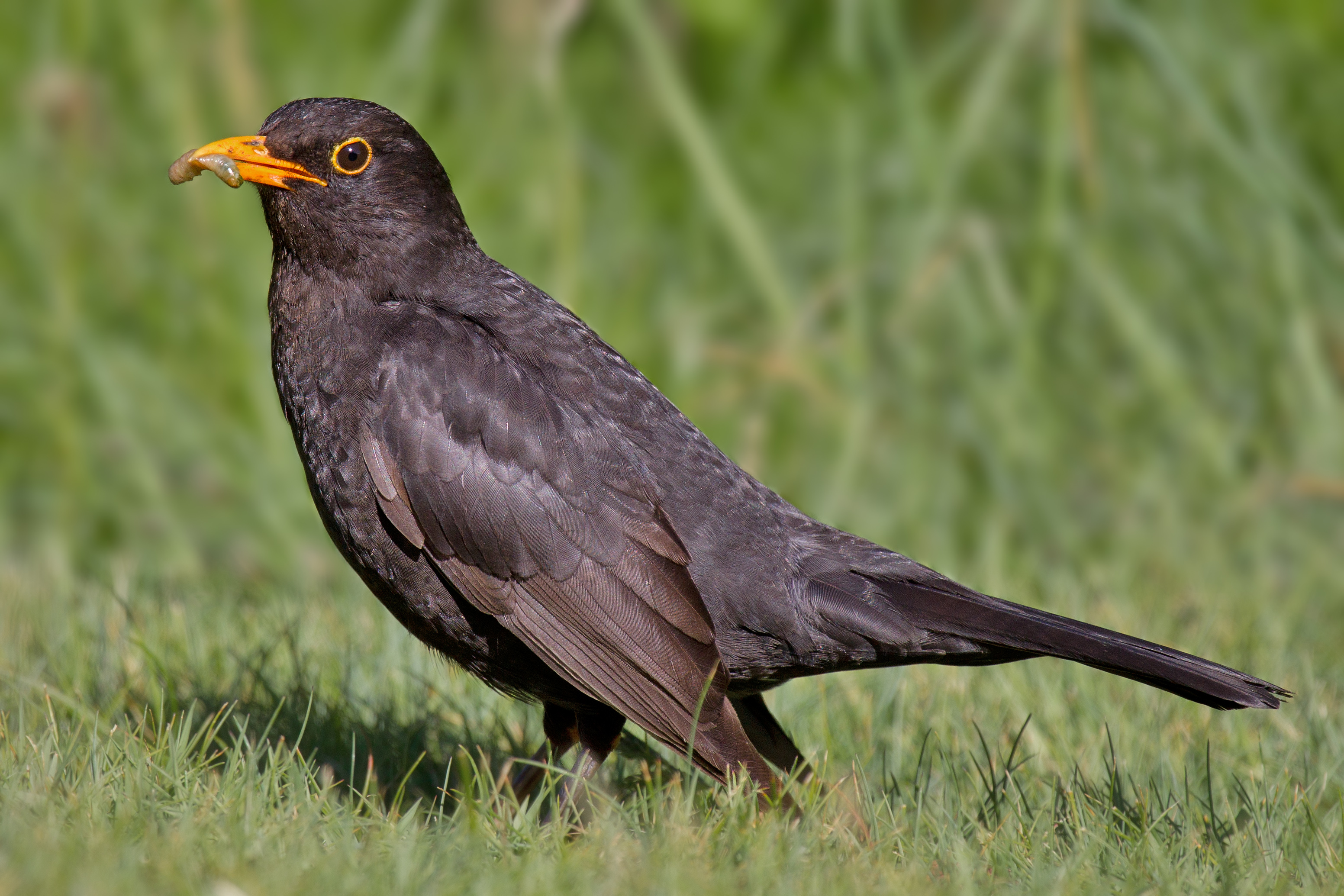
Diese Vögel lieben Spätblühende Traubenkirsche:
Steckbrief

Familie
Rosaceae
Gattung
Prunus
Ordnung
Rosales
Klasse
Magnoliopsida
Lebensform
Baum
Habitat
Found in a variety of soils, preferring moist fertile conditions on north or east facing slopes or protected coves. Dry woods.
Essbarkeit
★★★★☆
Heilwirkung
★★☆☆☆
Licht
4/10
Feuchtigkeit
5/10
Boden
4/10
pH-Wert pH 4 – 7.5

Anbau & Pflege

Requires a well-drained moisture retentive soil. Requires a warm sunny position. Thrives in a loamy soil, doing well on limestone. Prefers some chalk in the soil but apt to become chlorotic if too much is present. A fast-growing and moderately long-lived tree in the wild, producing a heavy fruit crop about once every 4 years. It is cultivated for its timber in C. Europe. This species produces an abundance of flowers and usually fruits well in Britain. In the wild the tree begins to fruit when about 10 years old and then continues for about 100 years, fruiting well in most years. Most members of this genus are shallow-rooted and will produce suckers if the roots are damaged. Plants in this genus are notably susceptible to honey fungus. Special Features: Attracts birds, North American native, Naturalizing, All or parts of this plant are poisonous, Attracts butterflies, Fragrant flowers, Attractive flowers or blooms.
Vermehrung: Seed - requires 2 - 3 months cold stratification and is best sown in a cold frame as soon as it is ripe. Sow stored seed in a cold frame as early in the year as possible. Protect the seed from mice etc. The seed can be rather slow, sometimes taking 18 months to germinate. Prick out the seedlings into individual pots when they are large enough to handle. Grow them on in a greenhouse or cold frame for their first winter and plant them out in late spring or early summer of the following year. Cuttings of half-ripe wood with a heel, July/August in a frame. Softwood cuttings from strongly growing plants in spring to early summer in a frame. Layering in spring.

Essbare Verwendung

Edible Parts: Fruit Seed Edible Uses: Condiment Drink Fruit - raw or cooked in pies, jellies, stews etc. It must be fully ripe or else it will have a bitter flavour. The fruit can taste sweet or bitter. The better fruits have a thin skin and a juicy flesh with a pleasant vinous flavour. The fruit can also be used as a flavouring. The taste is best when the plant is grown in a sunny position. The fruit is about 9mm in diameter and contains one large seed. Seed - raw or cooked. Do not eat the seed if it is too bitter - see the notes above on toxicity. An infusion of the twigs is used as a beverage. An extract from the bark is used commercially as a flavouring in soft drinks, sweets, syrups and baked goods.

Weitere Nutzung

Dye Wood A green dye can be obtained from the leaves. A dark grey to green dye can be obtained from the fruit. Wood - close and straight-grained, light, strong, rather hard, highly shock resistant. It bends well, works well, finishes smoothly, glues well, seasons well, shrinks moderately and is moderately free from checking and warping. It weighs about 36lb per cubic foot and takes a beautiful polish. It is widely used for furniture, cabinet making, the interior finish of buildings etc.

Verbreitung

Heimisch: Alabama, Arizona, Arkansas, British Columbia, Chía, vereda Yerbabuena, Sede del Instituto Caro y Cuervo, Colorado, Connecticut, Delaware, District of Columbia, El Salvador, England [I] (England [I], Wales [I], Isle of Man [I], S-Scotland [I]); Ireland [I] (Northern Ireland [I]); Denmark [I]; Norway [I]; Sweden [I]; Netherlands [I]; Germany [I]; Switzerland [I]; Austria [I]; Austria [I]; Poland [I]; Czech Republic [I]; Slovakia [I]; Hungary [I]; Spain [I]; France [I]; Italy [I]; Croatia [I]; former Yugoslavia [I]; Romania [I]; Estonia [I]; Lithuania [I]; Belarus [I]; European Russia [I]; Ukraine [I]; Mozambique [I]; South Africa [I]; Uzbekistan [I]; India [I] (Uttar Pradesh [I]); Java [I]; Australia [I] (New South Wales [I]); Canada (British Columbia, New Brunswick, Nova Scotia, Ontario, Québec); USA (Alabama, Arkansas, Connecticut, District of Columbia, Delaware, Florida, Georgia, Iowa, Illinois, Indiana, Kansas, Kentucky, Louisiana, Massachusetts, Maryland, Maine, Michigan, Minnesota, Missouri, Mississippi, North Carolina, North Dakota, Nebraska, New Hampshire, New Jersey, New York, Ohio, Oklahoma, Pennsylvania, Rhode Island, South Carolina, Tennessee, Texas, Virginia, Vermont, Wisconsin, West Virginia); Mexico (Aguascalientes, Baja California Sur, Chiapas, Chihuahua, Coahuila, Colima, Ciudad de Mexico, Durango, Guanajuato, Guerrero, Hidalgo, Jalisco, México State, Michoacán, Morelos, Nayarit, Nuevo Leon, Oaxaca, Puebla, Querétaro, San Luis Potosi, Sinaloa, Sonora, Tamaulipas, Tlaxcala, Veracruz, Zacatecas); Revillagigedos Isl. (Isla Socorro); Guatemala, Florida, Georgia, Global, Guatemala, Honduras, Illinois, Indiana, Iowa, Jardín Botánico de Bogotá, Kansas, Kentucky, Louisiana, Maine, Manizales | Pasto, Maryland, Massachusetts, Medialuna del sur de Bogotá D.C.: Ciudad Bolívar, Usme, San Cristóbal, Tunjuelito, Kennedy, Rafael Uribe Uribe y Bosa., Mexican Pacific Is., Mexico Central, Mexico Gulf, Mexico Northeast, Mexico Northwest, Mexico Southeast, Mexico Southwest, Michigan, Minnesota, Mississippi, Missouri, Nebraska, New Brunswick, New Hampshire, New Jersey, New Mexico, New York, North America, North Carolina, Nova Scotia, Ohio, Oklahoma, Ontario, Panamá, Pennsylvania, Québec, Rhode I., SFF Iguaque, South Carolina, Tennessee, Texas, Vermont, Virginia, Washington, West Virginia, Wisconsin, Área urbana de Bogotá, D.C. Jardín Botánico José Celestino Mutis – Sede central Eingeführt: Austria, Baltic States, Belgium, Bogotá, Bolivia, Burundi, Central European Russia, Colombia, Czechia-Slovakia, Denmark, Ecuador, France, Galápagos Islands, Germany, Great Britain, Hungary, Ireland, Italy, Korea, NW. Balkan Pen., Netherlands, New South Wales, Northern Provinces, Norway, Peru, Poland, Romania, Rwanda, Spain, Sweden, Switzerland, Ukraine

Alternative deutsche Namen

Herbst-TraubenkirscheHerbsttraubenkirscheSpätblühende TraubenkirscheSpäte Trauben-KirscheSpäte Traubenkirsche
Haftungsausschluss: Die hier dargestellten Inhalte dienen ausschließlich der allgemeinen Information. Sie ersetzen keine professionelle Beratung durch Ärzte, Apotheker oder Kräuterkundige. Das Sammeln und Verwenden von Wildpflanzen geschieht auf eigene Gefahr. Verwechslungsgefahr mit giftigen Pflanzen besteht. Mehr erfahren