Nº 0097 / 1.200· Solanaceae
Tollkirsche
Atropa belladonna
Wildpflanze sehr stark giftig
35 Fotos
BLÜTE
violett · Hochsommer, Spätsommer, Frühsommer
Merkmale
Rezepte mit dieser Pflanze
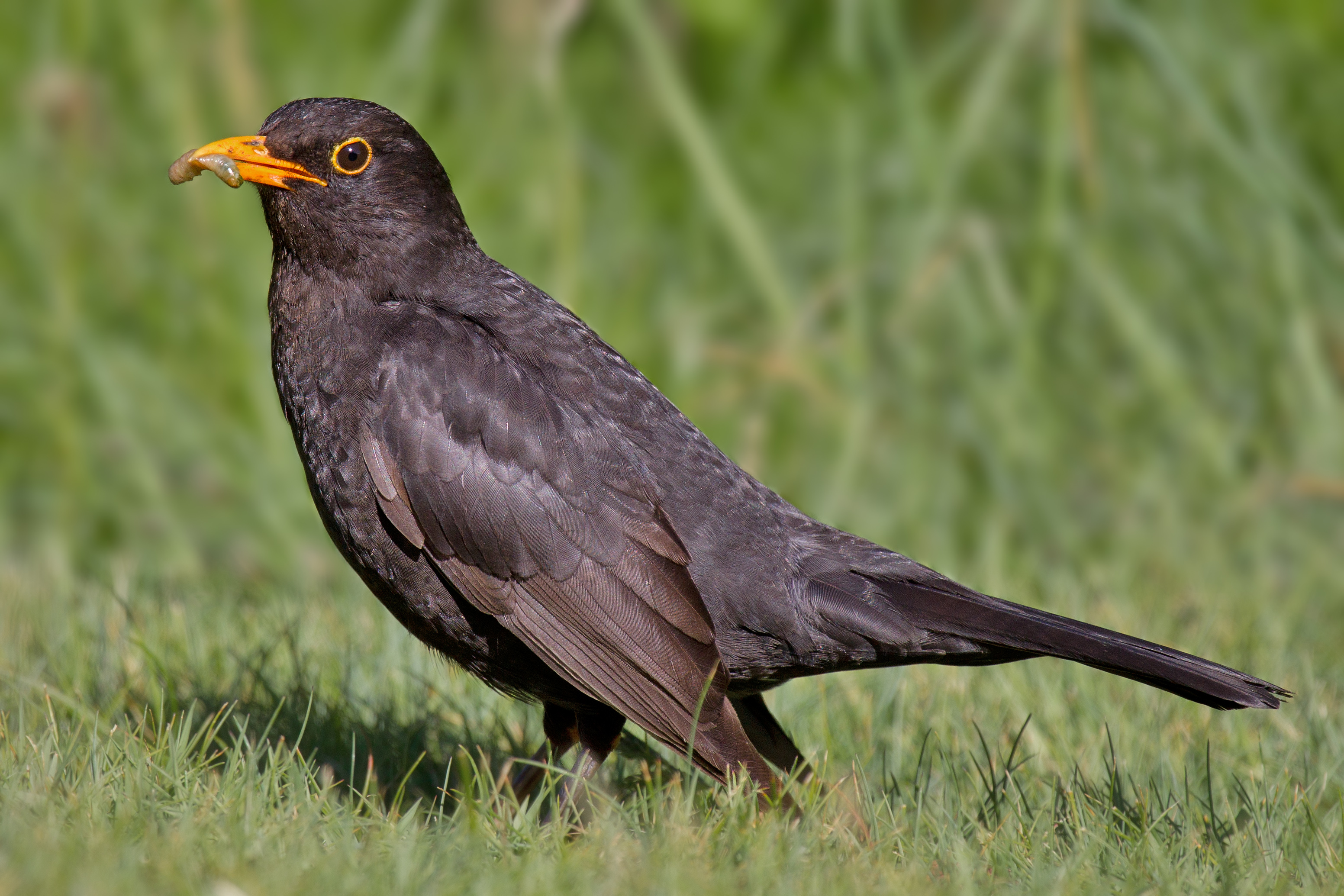
Vogelwelt
Diese Vögel lieben Tollkirsche:

Steckbrief
Familie
Solanaceae
Gattung
Atropa
Ordnung
Solanales
Klasse
Magnoliopsida
Habitat
Woods, thickets and hedges, mainly on calcareous soils.
Heilwirkung
★★★☆☆
Anbau & Pflege
Succeeds in any well-drained moisture retentive soil in sun or partial shade. Prefers a calcareous soil. When grown as a medicinal plant, the highest levels of the medically active alkaloids are obtained from plants growing on a light, permeable chalky soil, especially when on a south-west facing slope. The highest concentrations are also formed when the plant is growing in a sunny position and in hot summers. The northerly limits of cultivation are about 50 - 55° north and at an altitude between 100 - 200 metres. This species is widely cultivated, especially in eastern Europe, for the medically active compounds it contains. These are used in the drugs industry to produce a range of medicines. Plants tend to be short-lived. Slugs are very fond of this plant and have been known to completely remove the outer bark from the stems[K].
Vermehrung: Seed - best sown as soon as it is ripe in a cold frame. Germination of stored seed is slow and erratic, usually taking 1 - 6 months at 10°c. When they are large enough to handle, prick the seedlings out into individual pots and grow them on in the greenhouse for at least their first winter. Plant them out into their permanent positions in late spring or early summer, after the last expected frosts. Cuttings of softwood terminal shoots in spring. Root cuttings in winter.
Essbare Verwendung
None known
Weitere Nutzung
This species has been found to be effective in removing PCB's from the soil and detoxifying them. The plant is more effective in doing this if it is infected with the bacterial parasite Agrobacterium tumefaciens.
Verbreitung
Heimisch: Albania, Algeria, Austria, Belgium, Brussels-Capital Region, Bulgaria, Corse, Czechia-Slovakia, DK, FI, Flanders, Flemish Region, France, Germany, Grand Duchy of Luxembourg, Great Britain, Greece, Hungary, Iran, Ireland, Italy, Krym, Lebanon-Syria, Morocco, NO, NW. Balkan Pen., Netherlands, Newfoundland, North America, North Caucasus, Poland, Portugal, Portugal Continental, Romania, Sardegna, Sicilia, Spain, Switzerland, Transcaucasus, Türkiye, Türkiye-in-Europe, Ukraine, Walloon Region, conterminous 48 United States
Eingeführt: Baltic States, California, China Southeast, Denmark, EE, Finland, IE, Illinois, Ireland, LT, Lithuania, Michigan, Missouri, NO, New Jersey, New Zealand South, Norway, PT, Portugal, SC, SE, South Australia, Sweden, Tristan da Cunha, Washington
Alternative deutsche Namen
Echte TollkirscheTollkirsche
Haftungsausschluss: Die hier dargestellten Inhalte dienen ausschließlich der allgemeinen Information. Sie ersetzen keine professionelle Beratung durch Ärzte, Apotheker oder Kräuterkundige. Das Sammeln und Verwenden von Wildpflanzen geschieht auf eigene Gefahr. Verwechslungsgefahr mit giftigen Pflanzen besteht. Mehr erfahren